Experience Design
Technology & Development Services
Design & Branding
Digital Marketing, SEO
AI-Powered Website Development Services
Websites built with generative AI and agentic workflows — live faster, personalized by default, and structured to rank in both Google and AI answer engines.
Nexovah builds AI-native websites from the ground up: generative design exploration, agentic MCP-driven development, built-in personalization, and AI-ready SEO and GEO — not a chatbot page-builder with a new coat of paint. One accountable team takes you from strategy to a live, production-grade site. Trusted by 350+ businesses worldwide.


Faster From Kickoff to Launch
Generative design exploration and agentic, MCP-driven code generation cut typical build timelines dramatically — without cutting corners.

Personalization Built In
Content, layout, and recommendations that adapt to each visitor in real time — not a bolted-on plugin.

Ready for Google and AI Search
Structured from day one for traditional SEO and for citation inside ChatGPT, Perplexity, and Gemini answers.
What Is AI-Powered Website Development?
AI-powered website development is the practice of using artificial intelligence throughout the build — not just to generate a template, but to accelerate design exploration, personalize the experience for each visitor, power on-site search and chat, and structure content for both traditional search engines and AI answer engines. It is different from a DIY AI website builder (Wix, 10Web, and similar): those tools generate a generic template from a prompt with no strategy, no custom code ownership, and no engineering behind it. Nexovah's approach pairs generative AI with real engineers and an agentic, MCP-connected design-to-code workflow, so what you get is a custom, production-grade website — built faster because of AI, not built entirely by AI with no one checking the work.
Get My Free Website AuditAI-Driven Discovery & Strategy
We use AI-assisted research to analyze your competitors, audience behavior, and market gaps — turning raw data into a clear build plan before a pixel is drawn.
Generative UI Design
Generative AI proposes layouts, components, and variations against your brand rules, so we explore more directions in less time — then a real designer refines what works.
Agentic Design-to-Code Development
Our agents read your live Figma design via MCP — components, tokens, layout — and generate production-ready, design-system-compliant code, not a screenshot guess.
AI Personalization & Smart Search
Real-time content and recommendation adaptation per visitor, plus AI-powered on-site search that understands vague or misspelled queries.
AI Chat & Virtual Assistants
Round-the-clock intelligent chat that actually answers questions and qualifies leads, wired into your CRM — not a static FAQ widget.
AI-Powered SEO & GEO
On-page SEO plus structured data, schema, and an llms.txt file so AI answer engines can cite your site accurately.
Performance & Security Hardening
AI-assisted testing catches bugs and performance regressions earlier, and anomaly-detection patterns strengthen your site against attacks.
Continuous Optimization
Post-launch, we use real user analytics and AI-flagged friction points to keep improving conversion — launch is the start, not the finish line.
Our Agentic AI Development Stack
The toolchain that makes "AI-powered" real instead of a buzzword: design and code share one live, structured context.
Get a Free QuoteDesign & Generative Tools
Figma (Dev Mode, Make, variables, Code Connect) for the design system; generative tools like v0 and Figma Make for rapid exploration and prototyping.
Agentic AI Coding
Claude Code, Cursor, GitHub Copilot, and Windsurf turn validated designs into real, reviewed code — engineers steer architecture, security, and quality throughout.
MCP (Model Context Protocol)
The Figma MCP server streams live design context — component hierarchy, tokens, layout constraints, and the Code Connect map — directly into code generation.
Rapid Prototyping & Vibe-Coding Platforms
For scaffolding fast, working prototypes we bring in Lovable, Bolt.new, and Replit Agent — full-stack generators that stand up a working frontend, backend, and database from a plain-language brief in minutes, which our engineers then harden into a production build.
The Models Behind the Agents
Claude Sonnet and Opus for careful, multi-file production code; ChatGPT and Codex for fast, high-throughput implementation and CI-friendly runs; Google's Gemini Flash for near-instant iteration with a context window large enough to reason across your entire codebase at once.
Backend, Database & Cloud
Supabase and Firebase give us instant authentication, real-time databases, and storage without weeks of backend scaffolding; AWS carries the production workload the same day a build moves from prototype to live site.
Editors & Agent-First IDEs
Visual Studio Code remains our engineers' editor of record, extended by Google's Antigravity — a VS Code-based, agent-first IDE built on the Gemini model family with a context window large enough to plan, write, test, and deploy from a single workspace our team still reviews line by line.

Why an MCP-Connected Workflow Matters
Model Context Protocol is now the industry-standard way for AI agents to read live design context instead of guessing from a screenshot. More than 10,000 public MCP servers are active today, and Anthropic handed MCP over to the Linux Foundation in December 2025 so no single vendor controls it. We route your Figma design through it directly — the result is near pixel-perfect, design-system-compliant code, and revision rounds that drop from four or five down to typically one.
Accelerate your Business
Success, just like our clients
How We Build Your AI-Powered Website
This is the exact stack that turns a multi-week build into a multi-day one — named tools we run on every project, not logos on a slide.
Five stages, each backed by a specific tool doing real work, with our engineers reviewing every output before it ships.
Rapid Prototyping
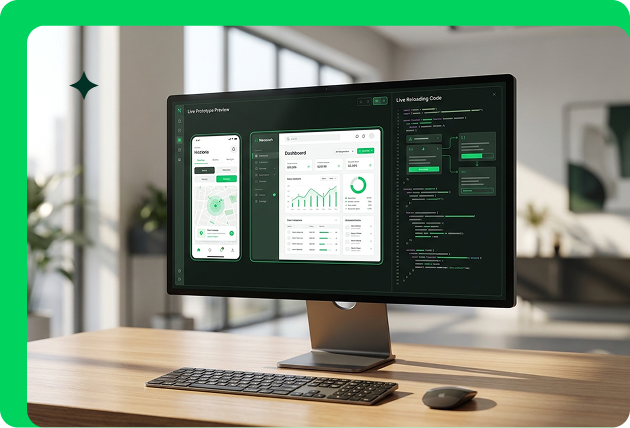
Lovable, Bolt.new, or Replit Agent scaffold a working frontend, backend, and database from your brief in minutes, giving us a real, clickable starting point instead of a static mockup.
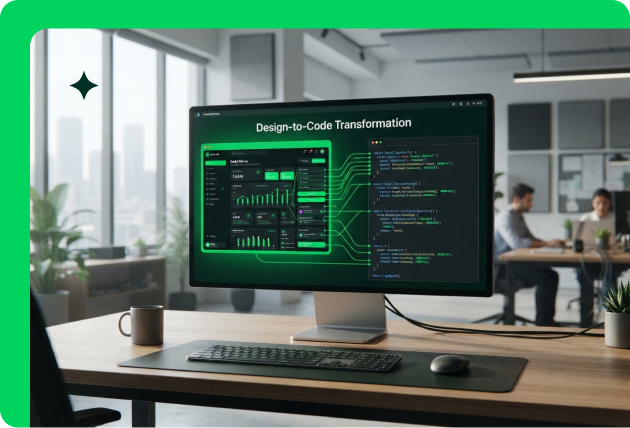
Agentic Design-to-Code
Claude Code and Cursor turn the validated design into production-ready code inside an MCP-connected workflow, with Google Antigravity handling large-context refactors across the full codebase.
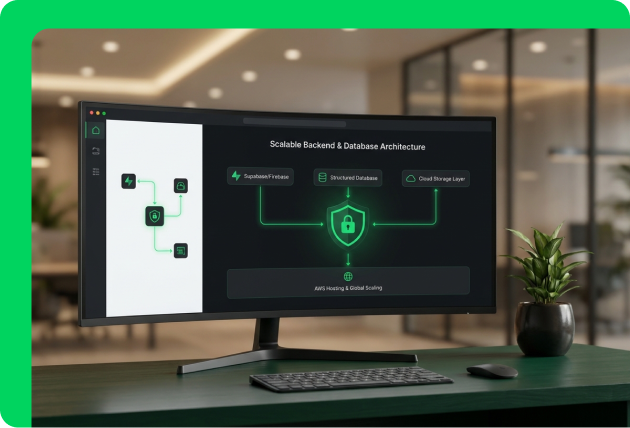
Backend & Database Architecture
Supabase or Firebase for authentication, real-time data, and storage, with AWS underneath for the infrastructure that carries the site once it's live and scaling.
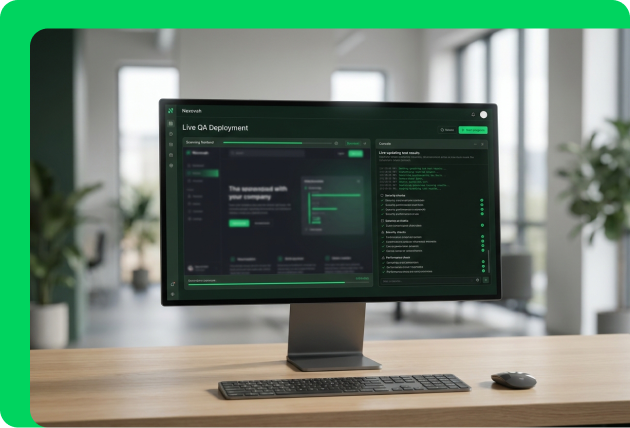
AI-Assisted QA & Testing
ChatGPT and Codex generate and run test scenarios alongside our engineers, catching regressions in hours instead of the days a manual QA pass usually takes.
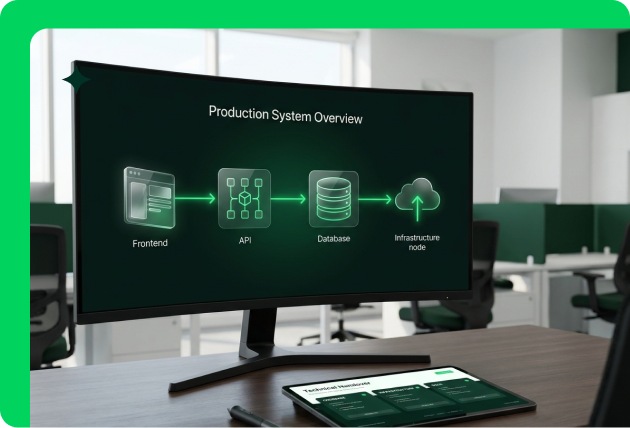
Launch & Handover
A production-grade website — frontend, backend, and database — shipped in days, sometimes hours for smaller builds, not the multi-week timeline a traditional build requires.
What AI Actually Does on Your Website
Real AI features running in production on the site your visitors use — not a marketing slide.
AI-Driven Personalization Engines
Content, offers, and layout that adapt in real time to each visitor's behavior and source — measurably lifting engagement and conversion.
Intelligent Chat & Virtual Assistants
AI assistants that answer real questions, qualify leads, and hand off warm conversations to your team — live 24/7.
AI-Optimized Content & SEO
Structured content, schema markup, and an llms.txt file that make your site legible to both Google's crawlers and AI answer engines.
Predictive User Analytics
AI-flagged friction points — where visitors hesitate, scroll away, or drop off — so every iteration is backed by real behavior, not guesswork.
AI-Automated Testing & QA
Automated regression and performance testing catch issues earlier in the build, so launches are faster and more stable.
Rapid, Cost-Optimized Builds for Startups
The same agentic stack that speeds up any build hits hardest for startups and small teams: a working site with a real backend and database in days, not the weeks and larger invoice a traditional build requires — letting you validate an idea or launch before your budget or runway does.
Why Choose Nexovah
One accountable team building genuinely AI-native websites — not a no-code builder, not outsourced pieces stitched together.
Agentic, MCP-Driven Workflow
A connected toolchain, not a prompt-and-pray page builder — design and code share one live context.
Faster Time to Launch
AI-accelerated design and development without cutting the engineering review that keeps quality high.
AI-Native SEO & GEO
Built to rank in Google and get cited in AI answers from day one, not retrofitted after launch.
Transparent & On Time
Clear milestones, no hidden fees, money-back on the first milestone.
You Own Everything
100% of the design and code is yours — no lock-in to a proprietary builder.
Hours-to-Days Turnaround
Lovable, Bolt.new, Replit Agent, Claude Code, Cursor, and Google Antigravity working together mean full websites with real backends ship in days, sometimes hours — not the multi-week timeline most agencies quote.
Tools and
technologies we use
We leverage the latest design and development tools to craft stunning user experiences with exceptional functionality.
Design tools
'%3e%3cpath%20d='M7.08905%2043.0013C11.0021%2043.0013%2014.178%2039.7907%2014.178%2035.8347V28.668H7.08905C3.17587%2028.668%200%2031.8787%200%2035.8347C0%2039.7907%203.17587%2043.0013%207.08905%2043.0013Z'%20fill='%230ACF83'/%3e%3cpath%20d='M0%2021.4987C0%2017.5427%203.17587%2014.332%207.08905%2014.332H14.178V28.6653H7.08905C3.17587%2028.6653%200%2025.4547%200%2021.4987Z'%20fill='%23A259FF'/%3e%3cpath%20d='M0%207.16664C0%203.21064%203.17587%200%207.08905%200H14.178V14.3334H7.08905C3.17587%2014.3334%200%2011.1226%200%207.16664Z'%20fill='%23F24E1E'/%3e%3cpath%20d='M14.1797%200H21.2687C25.1818%200%2028.3577%203.21064%2028.3577%207.16664C28.3577%2011.1226%2025.1818%2014.3334%2021.2687%2014.3334H14.1797V0Z'%20fill='%23FF7262'/%3e%3cpath%20d='M28.3577%2021.4987C28.3577%2025.4547%2025.1818%2028.6653%2021.2687%2028.6653C17.3556%2028.6653%2014.1797%2025.4547%2014.1797%2021.4987C14.1797%2017.5427%2017.3556%2014.332%2021.2687%2014.332C25.1818%2014.332%2028.3577%2017.5427%2028.3577%2021.4987Z'%20fill='%231ABCFE'/%3e%3c/g%3e%3c/svg%3e) Figma: Design, Protoype
Figma: Design, Protoype MIRO
MIRO illustrator, Vector
 Photoshop, Image
 Social & Doc Design
Development tools
 HTML 5
 CSS 3
CSS 3'/%3e%3cdefs%3e%3clinearGradient%20id='paint0_linear_7902_1670'%20x1='0'%20y1='19.5'%20x2='46'%20y2='19.5'%20gradientUnits='userSpaceOnUse'%3e%3cstop%20stop-color='%237F3BDC'/%3e%3cstop%20offset='1'%20stop-color='%236A36D5'/%3e%3c/linearGradient%3e%3c/defs%3e%3c/svg%3e) Bootstrap 4, 5
Bootstrap 4, 5'%3e%3cmask%20id='mask0_7506_10112'%20style='mask-type:luminance'%20maskUnits='userSpaceOnUse'%20x='0'%20y='0'%20width='54'%20height='33'%3e%3cpath%20d='M0%200H54V32.4H0V0Z'%20fill='white'/%3e%3c/mask%3e%3cg%20mask='url(%23mask0_7506_10112)'%3e%3cpath%20fill-rule='evenodd'%20clip-rule='evenodd'%20d='M27%200C19.8%200%2015.3%203.6%2013.5%2010.8C16.2%207.2%2019.35%205.85%2022.95%206.75C25.004%207.263%2026.472%208.754%2028.097%2010.403C30.744%2013.09%2033.808%2016.2%2040.5%2016.2C47.7%2016.2%2052.2%2012.6%2054%205.4C51.3%209%2048.15%2010.35%2044.55%209.45C42.496%208.937%2041.028%207.446%2039.403%205.797C36.756%203.11%2033.692%200%2027%200ZM13.5%2016.2C6.3%2016.2%201.8%2019.8%200%2027C2.7%2023.4%205.85%2022.05%209.45%2022.95C11.504%2023.464%2012.972%2024.954%2014.597%2026.603C17.244%2029.29%2020.308%2032.4%2027%2032.4C34.2%2032.4%2038.7%2028.8%2040.5%2021.6C37.8%2025.2%2034.65%2026.55%2031.05%2025.65C28.996%2025.137%2027.528%2023.646%2025.903%2021.997C23.256%2019.31%2020.192%2016.2%2013.5%2016.2Z'%20fill='%2338BDF8'/%3e%3c/g%3e%3c/g%3e%3cdefs%3e%3cclipPath%20id='clip0_7506_10112'%3e%3crect%20width='54'%20height='33'%20fill='white'/%3e%3c/clipPath%3e%3c/defs%3e%3c/svg%3e) Tailwind
Tailwind Angular js
 Vue Js
 React Js
Trusted by 350+ businesses








4.6 Stars, 10 Reviews
4.6 Stars, 50+ Reviews

75+ Projects Repository

4.5 Stars, 32 Reviews

4.4 Stars, 40 Reviews

4.7 Stars, 550 Reviews
4.8 Stars, 07 Reviews

4.8 Stars, 371 Reviews

4.6 Stars, 05 Reviews

Don't take our word for it
Verified Everywhere. Trusted, reviewed, and recommended across the platforms that matter. We are open for a project — lets discuss.
Learn more


The tools behind the work
The tools are not the advantage. The advantage is knowing which tool owns which job — and wiring them together so the output is faster, cleaner, and more consistent than any single tool could deliver alone.
AI-Powered Website Development FAQs
It is the practice of using artificial intelligence throughout the build — generative design exploration, agentic MCP-driven code generation, built-in personalization, AI chat, and AI-ready SEO — delivered by real engineers, not a no-code AI builder with no one reviewing the output.
DIY builders generate a generic template from a prompt in minutes, with no custom code ownership, no strategy, and no engineering behind it. We use AI to accelerate a custom build that real engineers design, code, test, and own end to end — you get a production-grade site, not a templated one.
Model Context Protocol lets our AI agents read your live Figma design — components, tokens, layout — directly, instead of guessing from a screenshot. It is now an open, Linux Foundation-governed standard with over 10,000 active public servers, and it is why our design-to-code output is near pixel-perfect.
AI acceleration speeds up the build; ranking still comes from real SEO fundamentals — clean structure, fast performance, quality content, and technical health — which we build in from day one, plus structured data and an llms.txt file so AI answer engines can cite you accurately too.
It depends on scope, integrations, and the AI features you need (personalization, chat, smart search). We scope every project up front with fixed milestones and no hidden fees, backed by a money-back guarantee on the first milestone.
Yes — this is a full new-build service, but we also retrofit AI chat, smart search, and personalization onto existing sites. Ask us during your free audit which approach fits your situation.
A focused business website typically takes 4-6 weeks; larger AI-feature-rich platforms run 10-12 weeks or more. Our AI-accelerated workflow shortens revision cycles significantly without skipping steps.
Cursor, Claude Code, GitHub Copilot, Windsurf, and Google Antigravity for agentic coding; Lovable, Bolt.new, and Replit Agent for rapid full-stack prototyping; Supabase, Firebase, and AWS for database, auth, and hosting; and Claude, ChatGPT/Codex, and Gemini Flash as the underlying models. Every output goes through engineering review before it ships.
Smaller sites with a working backend and database can go from brief to live in days, occasionally hours for a simple build. Larger, more custom projects still take longer, but consistently faster than a traditional multi-week build — this stack is a genuine turnaround change, not a marketing claim.
Yes. Faster builds mean fewer billed engineering hours for the same scope, and tools like Supabase and Firebase remove weeks of backend scaffolding that used to be billed separately — which is why this approach fits startups and small teams validating an idea on a limited budget particularly well.
We value your privacy
We use cookies (including Google Analytics) to understand how visitors use our site and improve your experience. Read our Privacy Policy for details.